Pasta Shapes Explained: Which Sauce Goes With Which Shape
A guide to the main pasta families, from spaghetti and tagliatelle to rigatoni, orecchiette and tortellini, with the sauce each shape suits, cooking tips and macros by pasta type.
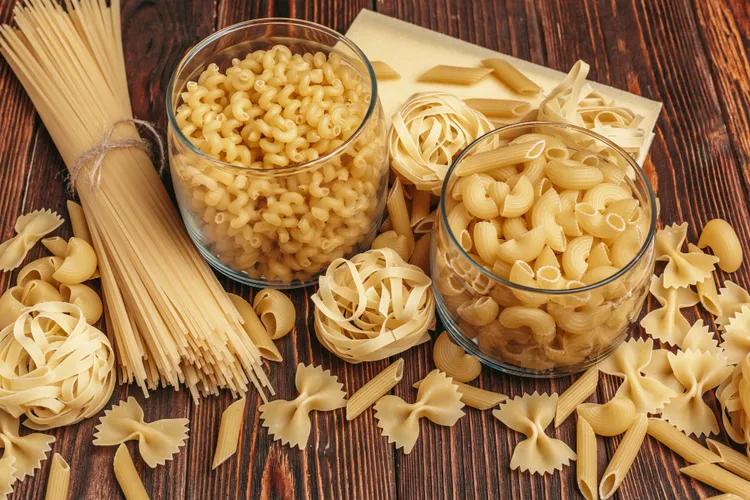
Italy has hundreds of pasta shapes, but they fall into about eight families, and each family exists to carry a certain kind of sauce. A heavy ragù slips off thin spaghetti and pools at the bottom of the plate. A delicate oil-and-garlic sauce disappears inside a big ridged tube. Matching shape to sauce is not fussiness. It decides how much sauce each bite gets, which changes flavor, texture and, a little, your calories.
Why Shape Matters: Surface, Texture and Hollows
Three physical features do the work:
- Surface area and thickness. Thin strands are coated by thin sauces. Wide ribbons have enough surface to carry heavy, rich ones.
- Ridges and grooves. Ridged tubes, twists and rough-surfaced pasta trap sauce in their texture. Smooth pasta lets sauce slide off.
- Hollows and cups. Tubes, shells and "little ears" catch chunks of vegetables, meat or beans inside.
The simple rule: the chunkier the sauce, the more the pasta needs ridges or a hollow to hold it. The thinner the sauce, the more it suits a long, smooth strand.
Dried, Fresh and Bronze-Die Pasta
Dried pasta (pasta secca) is made from durum wheat semolina and water, extruded through a die and dried. It is firm and holds its shape, which suits olive oil and tomato-based sauces. Fresh egg pasta (pasta fresca all'uovo) is made with soft wheat flour and eggs, rolled and cut. It is tender and delicate, and it suits butter, cream and meat ragù. Not all fresh pasta contains egg: southern shapes such as orecchiette are made from semolina and water.
The die matters too. Bronze-die pasta (trafilata al bronzo) comes out with a rough, matte, slightly floury surface that grabs sauce much better than the smoother pasta from Teflon-coated dies. If a box says bronze-die, you are paying for texture, and it shows. Our guide to dishes you're probably making wrong, according to locals shows how this plays out in carbonara and ragù.
Long Strands: Spaghetti, Linguine, Bucatini and Angel Hair
Long strands suit smooth, light sauces that coat rather than cling: olive oil and garlic (aglio e olio), simple tomato, clam sauce and emulsified sauces such as carbonara and cacio e pepe. The sauce wraps the strands in a thin film.
- Spaghetti: the all-rounder, good with tomato, oil-based sauces and carbonara.
- Linguine ("little tongues"): slightly flat, so it carries seafood and clam sauces a little better than round spaghetti.
- Bucatini: thick, with a hollow center, and popular in Rome with amatriciana and cacio e pepe. The sauce clings to the outside and a little gets inside.
- Capellini or angel hair: very fine and quick to cook, best with a light oil, a thin tomato sauce or broth. It overcooks in a minute or two.
For aglio e olio, the oil is the sauce, so quality matters. See our guide to the types of olive oil and which to cook with and which to finish with.
Flat Ribbons: Fettuccine, Tagliatelle and Pappardelle
Flat ribbons, usually made of egg pasta, have the surface area for rich, heavy sauces. The wider the ribbon, the heavier the sauce it can carry.
- Tagliatelle: the classic partner for the meat ragù of Bologna, as noted in dishes you're probably making wrong, according to locals.
- Fettuccine: narrower than tagliatelle, traditionally dressed with butter and Parmigiano in Rome. Fettuccine Alfredo is better known abroad than in Italy.
- Pappardelle: broad ribbons from Tuscany, served with slow-cooked game ragù such as wild boar or hare, and with mushroom sauces.
The Bolognese name is a good example of a dish tied to its place, which is the theme of foods named after places, people and accidents.
Tubes: Rigatoni, Penne, Ziti and Paccheri
Tubes handle chunky, hearty sauces and baked dishes, because the sauce clings outside and fills the inside.
- Rigatoni: large, ridged tubes, widely used in Rome for carbonara, amatriciana and gricia, and good for sausage or meat sauces.
- Penne rigate vs. penne lisce: rigate are ridged and hold sauce well, while lisce are smooth and let sauce slide off. Ridged is the better default for arrabbiata or vodka sauce.
- Ziti and mezze maniche: sturdy, straight tubes suited to baked pasta.
- Paccheri: large, smooth tubes from Naples, served with seafood or ragù, or stuffed and baked.
Twists and Spirals: Fusilli, Casarecce, Trofie and Cavatappi
Twisted shapes trap sauce in their grooves, which makes them good for sauces that are thick but smooth, such as pesto, and for pasta salad, where dressing needs to stay put.
- Trofie: tiny hand-rolled twists from Liguria, the traditional match for pesto genovese.
- Fusilli and gemelli: corkscrews that hold pesto, creamy sauces and chopped vegetables.
- Casarecce: rolled, slightly open S-shapes that catch sauces in the curl.
- Cavatappi: hollow corkscrews that are especially popular for mac and cheese in the US.
Shells, Ears and Cups: Conchiglie, Orecchiette and Cavatelli
Cupped shapes scoop up small pieces. Orecchiette ("little ears") come from Puglia, where they are made from semolina and water and traditionally served with turnip tops (cime di rapa) and anchovy. Medium shells (conchiglie) hold peas, ricotta and meat sauce, and large shells are made for stuffing and baking. Cavatelli, small curled dumplings of southern Italy, work well with greens, sausage and beans.
Small Shapes for Soup: Ditalini, Stelline, Fregola and Orzo
Tiny pasta belongs in soup, where it adds body without needing a fork. Ditalini ("little thimbles") go into pasta e fagioli. Stelline, little stars, go into clear broth. Fregola, toasted semolina pellets from Sardinia, are chewy and nutty and work in soups or with clams.
Orzo is Italian for barley, though it is a wheat pasta shaped like a grain of rice. It appears in soups, salads and rice-style pilafs. If you are comparing it with real rice, our guide to the types of rice and which one for which dish shows how the grains differ.
Stuffed Pasta: Ravioli, Tortellini and Agnolotti
With filled pasta, the filling is the star, so the sauce stays light: melted butter with sage, a little olive oil, or a clear broth. A heavy tomato or cream sauce hides the filling. Tortellini in broth is a traditional Christmas dish in Bologna and Emilia, a custom of the type discussed in why we eat certain foods on certain holidays. Piedmont's agnolotti are often served simply with butter or roast juices.
Quick Pairing Chart
- Olive oil, garlic, chili: spaghetti, linguine
- Clams and seafood: linguine, spaghetti, paccheri, fregola
- Simple tomato sauce: spaghetti, penne rigate, bucatini
- Carbonara, cacio e pepe, gricia: spaghetti, rigatoni, bucatini
- Meat ragù: tagliatelle, pappardelle, rigatoni
- Chunky vegetable or sausage sauce: rigatoni, penne rigate, orecchiette, cavatelli
- Pesto: trofie, fusilli, casarecce
- Creamy or cheese sauces: fettuccine, cavatappi, shells
- Baked pasta: ziti, rigatoni, large shells, lasagna sheets
- Soups: ditalini, stelline, fregola, orzo
- Pasta salad: fusilli, penne, conchiglie
- Stuffed pasta: butter and sage or broth
How to Cook Pasta So the Sauce Sticks
- Use plenty of salted water. A common guideline is about 1 liter of water per 100g of pasta and roughly 10g of salt per liter.
- Do not add oil to the water. It does not stop sticking and it can make the pasta slippery.
- Cook to al dente. Start tasting a minute or two before the package time. The pasta finishes cooking in the sauce.
- Save a cup of pasta water. Its starch helps the sauce bind and turn glossy.
- Finish in the pan. Drain, add the pasta to the sauce with a splash of pasta water, and toss over heat for a minute. Italian cooks dress pasta with just enough sauce to coat it instead of burying it.
- Do not rinse unless you are making a cold salad. Rinsing removes the surface starch that helps sauce cling.
Eggs play a role in some of these sauces, and our piece on why recipes ask for room temperature eggs explains why temperature affects how smoothly they emulsify.
Pasta Macros: Shape, Type and Portions
Shape does not change the calories per gram. What changes is how much sauce clings, so a ridged or cupped shape can carry more sauce per portion than a smooth one. The type of pasta changes the macros more. These are approximate values per 100g, and brands vary.
- Regular dried pasta (dry): about 360 kcal, 13g protein, 72g carbs, 1.5g fat, 3g fiber
- Regular pasta (cooked): about 158 kcal, 6g protein, 31g carbs, 1g fat
- Whole wheat pasta (dry): about 350 kcal, 13g protein, 70g carbs, 2g fat, 8 to 10g fiber
- Chickpea pasta (dry): about 340 kcal, 20g protein, 60g carbs, 6g fat, 13 to 14g fiber
- Red lentil pasta (dry): about 340 kcal, 23g protein, 60g carbs, 2 to 3g fat, 7g fiber
- Fresh egg pasta (as purchased): about 280 kcal, 11g protein, 54g carbs, 2.5g fat, since it contains water
Italian recipes typically use 80 to 100g of dry pasta per person for a main course, which is about 290 to 360 kcal before sauce. Swapping regular pasta for chickpea or lentil pasta adds roughly 6 to 12g of protein per 80g portion at about the same calories, though the texture is different and it overcooks easily.
Weigh pasta dry, not by volume. Shapes pack very differently, so a cup of small shells and a cup of rotini weigh different amounts. Cooked pasta also weighs about two to two and a half times its dry weight, which our guide to raw vs. cooked weight explains. For high-protein weeks, pasta works well alongside the ideas in what 150g of protein looks like in a day and the vegetarian plan for 120g of protein, where legume pasta and pasta with beans are useful.
Planning and Meal-Prepping Pasta
Set your daily numbers with the Consillar calculators, then turn them into a plate with macros to meals. For a big pasta dinner, splitting 2,000 calories across 3 meals and 2 snacks shows how to leave room for it. Build the week in the Consillar meal planner and scale batches with the meal prep tool.
Cooked pasta keeps 3 to 5 days in the fridge when it is cooled and refrigerated within two hours. For meal prep, cook it a minute under al dente, since it will soften when reheated, and keep the sauce separate where you can. Filled pasta and baked pasta freeze well.
Frequently Asked Questions
What is the best pasta shape for a chunky sauce?
Choose shapes with ridges or hollows, such as rigatoni, penne rigate, orecchiette, cavatelli or shells. They trap pieces of meat and vegetables instead of letting them fall to the bottom of the bowl.
Does pasta shape really make a difference?
Yes. Shape affects how much sauce clings, how the pasta feels in the mouth and how evenly each bite is dressed. The same sauce can taste quite different on spaghetti, rigatoni and orecchiette.
What is the difference between penne rigate and penne lisce?
Penne rigate has ridges that grip sauce, while penne lisce is smooth. Ridged penne is generally the better choice for most sauces, and smooth penne suits very light or creamy ones.
Why do Italians not serve ragù with spaghetti?
Thin round strands cannot hold a thick meat sauce, so the sauce slides off. In Bologna, ragù is served with tagliatelle, which has the width and rough surface to carry it.
Is fresh pasta better than dried?
Neither is better, they are different. Fresh egg pasta is tender and suits butter, cream and ragù. Dried semolina pasta is firmer and suits olive oil and tomato sauces. Most everyday Italian cooking uses dried pasta.
Did Marco Polo bring pasta from China?
Historians generally reject that story. Polo returned from China in 1295, but a Genoese document from 1279 lists a basket of macaroni, and a 12th-century Arab geographer described pasta being made near Palermo. The earliest origins are still debated, but pasta was established in Italy before Polo's return. We cover more food-origin myths in the surprising origin of everyday foods, and tomato sauce on pasta is also newer than most people assume, becoming widespread in the 1800s, a change in the spirit of how everyday foods changed over time.
Latest